


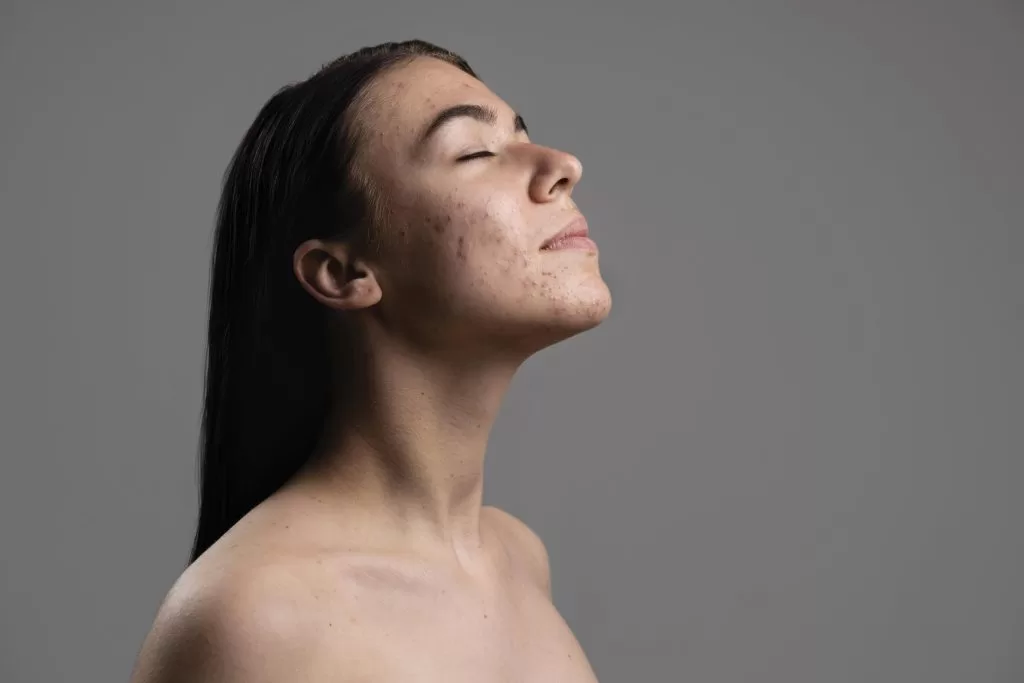
Acne Scars
Have you got scars on your face that just won’t go away? Those might be Acne scars that have remained on your face following breakouts. Acne scars are pretty frequent on the face, chest, and back. Acne affects around 80% of people between the ages of 11 and 30, with one out of every five developing scars. Scar reduction necessitates the use of either over-the-counter medicines or one or more treatments done by a dermatologist.
What is the root cause of acne?
An acne lesion (pimple) forms when bacteria, oils, and dead skin fill up and inflamed pores, the small holes in your skin through which oil and perspiration rise to the surface,
Every hour, 40,000 cells shed off your skin, yet these dead cells might block a pore. Clogged pores might be tiny and result in “whiteheads or blackheads.” These pores can become irritated and cause various forms of acne.
You are not alone if you suffer from acne. Acne is by far the most common skin problem in the world. It affects around 80% of adults between the ages of 11 and 30. Acne appears in teens as a result of their fluctuating hormone levels. Stress, the environment, menstrual cycles, oil-based cosmetics, and birth control pills are all at fault in adults, while hormones may still play a part.
How does acne cause scars?
Your skin is the largest part of your body. There are three primary levels to it. They are, in order of thickness; the epidermis, dermis, and hypodermis.The layers protect your sensitive inside organs from the environment, UV rays, and infections, and they also help in vitamin D production as a result of sunlight. Acne may appear everywhere there are sebaceous glands, although it is most common on the face, back, and chest.
Acne scars are caused by the inflammation of acne lesions. The acne pore enlarges, and the pore wall begins to deteriorate. Some acne lesions are microscopic, with shallow scars that heal quickly. The contents of blemishes can occasionally bleed into the surrounding tissue, creating severe scarring. The skin’s reaction is to produce new collagen strands in order to repair the scar.
Acne scars may be classified into two types: scars that form when tissue is lost, resulting in a depression in the skin’s surface, and scars that form when tissue is raised on the skin’s surface. In fact, this sort of acne scar indicates that your skin is doing its job – possibly too effectively. When your skin creates too much collagen (repair tissue) to help in the healing of the lesion – the acne – raised scars emerge.
Remember that since you have acne does not mean you will get scars. And if you do (one out of every five acne patients may have scarring), the best part is that not all acne scars are everlasting!
There are treatments available. Some treatments almost completely erase the scars, while others assist the skin in healing itself using its own collagen.
What are the different forms of acne scars and how do they appear?
If you have acne scars, you probably have more than one type. It is unusual for someone to have solely boxcar scars, or only keloid scars, or any combination of the two. Each of these can be handled to varying degrees of effectiveness.
Scarring that has atrophied or become depressed –
An ice pick is a tool that has a wide shaft that narrows to a tip. This type of acne scar features a big hole at the top that narrows to a point as it penetrates deeper layers of the skin, identical to the tool. Although this form of indent is common, it is also one of the most challenging scars to treat. They are visible on the brow and high cheeks, where the skin is thinner.
Rolling : These scars are more prevalent on the lower cheeks and jawline, where the skin is firmer. The sloping margins of the indents give the skin an uneven and wavy look.
Boxcar scars : Boxcar scars are indentations with sharper edges. Those edges pierce the skin deeply. Scars of this type are commonly observed on the lower cheekbones and jaw.
Hypertrophic or keloid scars: These scar tissue lesions protrude from the skin. They are produced by the proliferation of fibrous structures in the skin, including collagen. Scars on the chest, back, and shoulders, as well as the jawline, can be itchy, sensitive, or painful.
Treatment alternatives should be discussed with a dermatologist. We at Dr Marwah’s Clinic will assess what type of acne scar(s) you have and recommend the best treatment options based on your preferences and the location of the scar.
Get in touch as soon as possible. Treatment delays worsen the severity of acne scars.