Many patients notice a visible glow and lightning by week 6. Full results can take 8 to 16 weeks, depending on pigmentation depth.



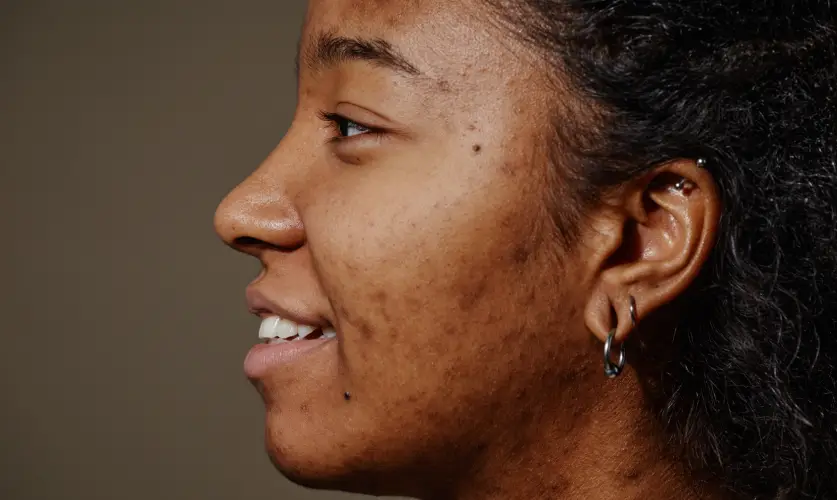
Melasma, sun damage, and hyperpigmentation on the face go deeper than the surface. We create a customized hyperpigmentation face treatment in Mumbai that balances science, safety, and skin stability because pigment-prone skin needs precision, not pressure.
Hyperpigmentation and melasma are among the most common facial skin concerns, especially in Indian skin, where excess melanin can make discoloration more visible.
Our dermatologists specialize in identifying the root cause and creating the best treatment for hyperpigmentation tailored to your skin type.
Hyperpigmentation is one of the most common skin concerns seen in Indian patients. Melasma, a complex form of pigmentation, appears as blotchy brown or greyish patches, usually on the cheeks, forehead, or upper lip.
Unlike regular tanning or sunspots, melasma is deeply rooted in the skin’s pigment-producing cells and often triggered by internal hormonal shifts, similar to other forms of hyperpigmentation on the face and neck caused by hormonal or inflammatory changes.
Dermatologists classify melasma into three types of skin concerns:
It can also show up in patterns such as centrofacial (forehead, nose, upper lip, chin), malar (cheeks), or mandibular (jawline). Understanding your type helps us decide which treatment will work best.
Common causes include:
These triggers also contribute to hyperpigmentation treatment for dark skin, where higher melanin levels make discoloration more visible and harder to treat.
Melasma is not a stain you can scrub away. It needs a calm, stable, medically sequenced approach, especially for deeper dermal pigment that does not respond to over-the-counter creams. That is why we offer expert hyperpigmentation treatment dermatologist-guided care that is tailored to your skin history and hormonal background.
Since pigmentation ranks among the top skin concerns for Indian patients, we follow a clinically sequenced plan for safe and lasting results. We do not rush into lasers or peels. First, we stabilize your skin and reduce inflammation. Then, if your pigmentation allows, we carefully layer in advanced treatments. This prevents rebound pigmentation and protects your skin barrier.
This is the most important step for long-term pigment correction and for calming recurring skin concerns caused by inflammation or sensitivity.
This phase can last 4 to 8 weeks, depending on your skin’s baseline health.
Once your skin is stabilized and less reactive, we introduce peel-based therapies to address stubborn pigmentation and hyperpigmentation on the face, ensuring an even, radiant tone. These are key components of our best treatment for hyperpigmentation plans.
All peels are dermatologist-supervised for optimal results.
Lasers are not the first step for melasma, but when timed correctly, they form an important part of our hyperpigmentation laser treatment protocols. Our dermatologists use low-fluence energy across multiple sessions for controlled and effective outcomes.
Our dermatologists recommend the most suitable hyperpigmentation laser treatment based on pigment depth and skin sensitivity. The hyperpigmentation laser treatment cost varies by device and number of sessions but remains transparent and tailored to your goals.
For pigmentation that resists conventional therapy, we integrate regenerative solutions under expert supervision.
Our hyperpigmentation treatment dermatologist may suggest:
These advanced options are ideal for chronic melasma or recurring facial skin concerns.
Melasma and hyperpigmentation are chronic but manageable conditions. With consistent, dermatologist-guided care, you can expect:
Pigmentation and uneven tone are among the most common skin concerns our clinic treats. Consistency and medical pacing deliver real, long-term clarity.
Melasma cannot be permanently cured, but it can be well-controlled with the best treatment for hyperpigmentation under a dermatologist’s supervision. With ongoing care, sun protection, and maintenance therapy, flare-ups can be minimized, and your skin tone can remain even.
Melasma has a tendency to return, especially without adequate sun and heat protection. Our dermatologists create personalized post-care plans, including sunscreen, antioxidants, and maintenance peels, to help reduce recurrence. Following these steps is key to managing this common facial skin concern effectively.
Yes, lasers are safe when used correctly, at the right time, and by trained dermatologists. Our hyperpigmentation laser treatment protocols use low-fluence settings that are suited for Indian and darker skin types. This approach ensures safety while breaking down pigment gradually, avoiding rebound pigmentation.
Yes, but only after a priming phase. We always test your skin first and adjust concentrations to avoid irritation.
Many patients notice a visible glow and lightning by week 6. Full results can take 8 to 16 weeks, depending on pigmentation depth.