

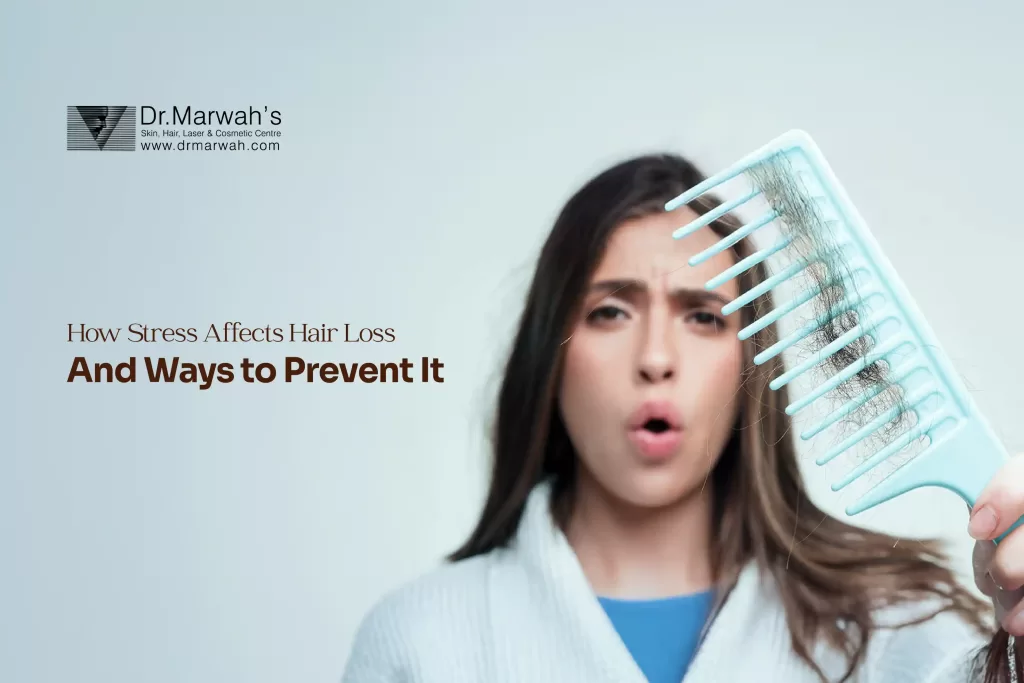
Hair fall is often brushed off as a seasonal issue or a cosmetic concern, but it can be much more complex—especially when it is linked to stress. At Dr. Marwah’s Clinic, we regularly see patients facing noticeable hair loss after a stressful event. Whether it’s due to work pressure, emotional strain, illness, or a major life change, stress can affect your scalp health more than you might realize.
This guide helps you understand how stress affects hair loss, how to recognize early signs, what you can do about it, and when it’s time to get professional help.
Understanding the Connection Between Stress and Hair Loss
Stress is a physical and emotional response that affects nearly every system in the body—including your hair. When you experience prolonged or intense stress, your body reacts by shifting resources to more “urgent” survival functions. Hair growth, unfortunately, is not a priority.
How Stress Triggers Hair Loss?
When you’re under stress, your body produces hormones like cortisol and adrenaline. These hormones impact the normal cycle of hair growth. This frequently causes hair follicles to shift into a resting phase, known as telogen effluvium. This means fewer follicles are actively growing new strands, and more are preparing to shed.
The result? Hair fall increases—sometimes noticeably. You may find hair coming out in clumps during washing or styling, or you might notice overall thinning that didn’t exist a few months ago.
Types of Hair Loss Triggered by Stress
There are several types of hair loss linked to emotional or physical stress. Here are the most common ones:
1. Telogen Effluvium
This is one of the most common types of hair loss linked to stress. It usually appears two to three months after a stressful event such as surgery, illness, job loss, or grief. Hair begins to shed all over the scalp, not just in one area. The hair fall is diffuse, meaning you may not see bald patches, but you’ll feel your ponytail is thinner or your part line looks wider.
The reassuring part is that telogen effluvium often resolves on its own. Once your stress levels come down and your body finds balance, hair typically begins to regrow. It may take a few months before you start to see visible changes.
2. Alopecia Areata
This is an autoimmune condition that can be triggered or worsened by stress. The immune system can wrongly target hair follicles, leading to small, round bald spots.These bald spots can develop on the scalp, beard area, eyebrows, or other regions. Hair may grow back, but it might fall again during another stressful period.
3. Trichotillomania
This is a psychological condition where the individual feels compelled to pull out their own hair, often from the scalp, eyebrows, or eyelashes. It is closely tied to anxiety, stress, and emotional imbalance. If not addressed, this behavior can lead to long-term harm to the hair.
Stress and Hair Loss in Women
Women often experience stress hair loss as a reaction to both emotional events and hormonal changes. Childbirth, menopause, PCOS, and chronic anxiety can all play a role.
At Dr. Marwah’s Clinic, we frequently see women experiencing stress hair loss during:
– Postpartum recovery
– Exams and academic pressure
– Relationship stress or personal loss
– Workplace burnout
– Crash dieting or nutritional deficiencies
The hair loss in women is usually diffuse and not concentrated in one area. It may be more noticeable along the crown, temples, or when tying up hair. Find out more about what causes hair loss in women here.
Stress and Hair Loss in Males
Men, especially those with a genetic tendency toward male pattern baldness, may experience accelerated hair thinning due to stress. Stress can trigger or worsen receding hairlines, hair fall at the temples, or thinning on the crown.
Although androgenic alopecia is mostly inherited, stress can make it progress more quickly. Lifestyle habits like smoking, poor sleep, and high anxiety also make things worse. If you’ve noticed your hairline changing faster than expected, stress might be part of the problem.
Common Symptoms of Hair Loss Due to Stress
Here’s how to tell if your hair fall might be linked to stress:
– A sudden increase in the amount of hair shed during combing or washing
– Hair loss that begins a few months after a major stressful event
– Overall thinning rather than bald spots
– A noticeable reduction in hair volume or ponytail thickness
– Widening of the hair part
– Patches of missing hair in more serious cases (such as alopecia areata)
If these symptoms sound familiar, it’s worth discussing them with a specialist.
Will Hair Grow Back After Stress?
One of the most frequent and pressing concerns is, “If stress causes hair loss, will it grow back?”
In most cases, the answer is yes. Hair affected by telogen effluvium usually regrows within 6–9 months after the stressor is resolved. However, the timeline varies depending on age, genetics, and overall health.
Keep in mind that stress hair loss before and after looks different on everyone. Some people see hair bounce back quickly, while others may take longer to recover. If stress continues without any intervention, the shedding can persist.
What Can You Do to Prevent or Control Stress-Related Hair Fall?
Here are realistic, doctor-recommended steps to protect your hair during stressful times:
1. Manage the Source of Stress
– Practice mindfulness or meditation
– Set work boundaries
– Talk to a counselor or therapist if needed
– Get quality sleep and maintain a consistent schedule
– Avoid multitasking or constant screen exposure
Lowering cortisol is an important step in breaking the pattern of hair loss.
2. Nourish From Within
Eat a diet rich in:
– Protein (chicken, fish, eggs, dairy, tofu)
– Iron (green vegetables, lentils, beets)
– Omega-3s (walnuts, chia seeds, salmon)
– B vitamins and zinc found in foods like whole grains, seeds, and nuts
– Biotin (avocados, sweet potatoes, eggs)
Avoid restrictive diets that deprive your body of essential nutrients. Nutrient deficiencies are a silent cause of hairfall due to stress.
3. Use Gentle Hair Practices
– Avoid excessive heat styling or frequent coloring
– Switch to mild, sulfate-free shampoos
– Minimize chemical treatments like straightening or perming
– Use a wide-tooth comb to detangle gently
– Don’t do tight hairstyles that pull your hair.
4. Seek Early Medical Support
If hair fall continues beyond 3–4 months, or if you notice bald patches, it’s time to consult a professional. At Dr. Marwah’s Clinic, we offer personalized evaluations that look beyond symptoms.
We assess hormone levels, nutritional gaps, scalp condition, and hair root health to build a targeted treatment plan. Read about hair fall causes to cure and see how our clinic can help.
Effective Treatments for Stress-Related Hair Loss
At Dr. Marwah’s Hair Clinic in Mumbai, we combine proven clinical methods with customized protocols to restore hair health. Treatment options include:
– PRP Therapy (Platelet-Rich Plasma): Uses your own blood growth factors to stimulate follicles
– Hair Mesotherapy: Feeds the scalp with targeted nutrients
– Low-Level Laser Therapy (LLLT): Improves circulation and boosts regrowth
– Medications: Minoxidil or oral therapies, if indicated
– Micronutrient Correction: Based on lab findings
– Lifestyle Counselling: Addressing root causes of stress or anxiety
We also track results with before and after photos to show realistic progress over time.
Conclusion: Don’t Ignore the Signs
Emotional stress and hair loss are more connected than most people think. The sooner you understand the cause, the faster you can take action. Hair is resilient—but only when the root issues are addressed.
If you’re seeing signs of stress and hair loss, whether you’re male or female, reach out. With early care, lifestyle support, and targeted treatments, regrowth is absolutely possible.
📍 For expert-guided hair treatment in Mumbai, trust the care and clinical experience of Dr. Marwah’s Clinic.
Book your consultation today and give your scalp the support it needs to heal from within.
Read more blogs:
– Hair Loss in Women: Causes, Types & How to Prevent It
– Effective Hair Fall Treatments That Actually Work