

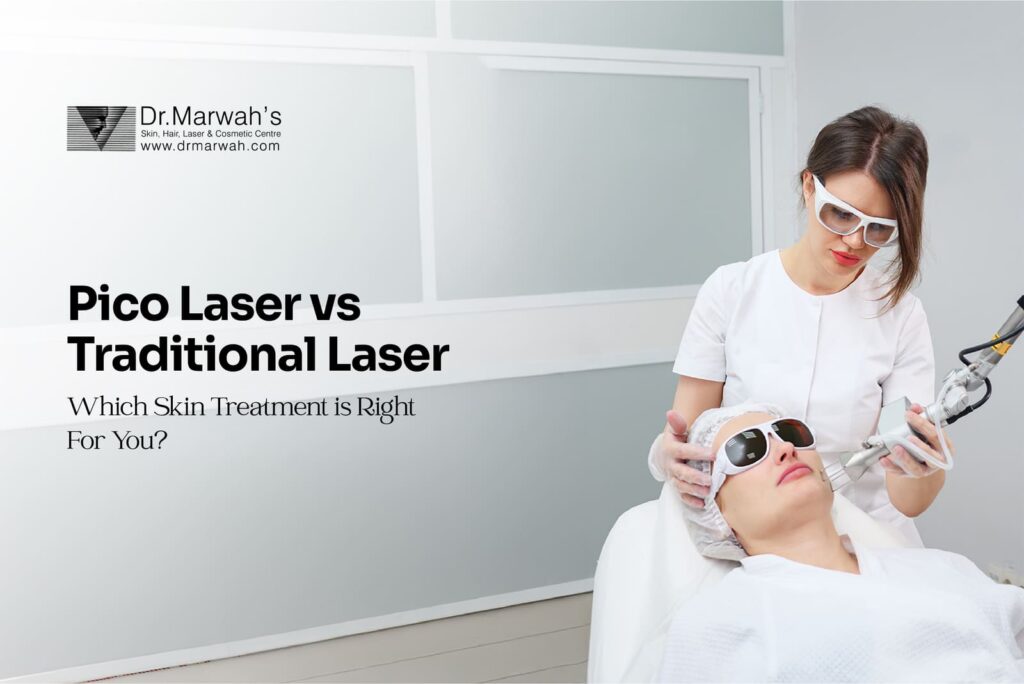
In modern dermatology, deciding between pico laser vs traditional laser, pico laser treatment, and traditional laser treatment can feel daunting. At Dr Marwah’s Clinic, we simplify the choice, helping you pick the optimum treatment based on skin concerns, skin type, and desired downtime.
What Is Pico Laser Treatment?
Pico laser treatment uses ultrashort pulses in the picosecond range (trillionths of a second), which is significantly faster than traditional lasers. This rapid delivery creates a photomechanical shockwave that shatters pigment or scar tissue with minimal heat, promoting collagen and elastin regeneration.
Unlike older nanosecond pulses that rely on thermal effects, pico laser treatment minimises collateral damage and reduces the risk of post-inflammatory pigmentation, making it safer for darker skin tones.
Clinical research shows promising results for enlarged pores, acne scars, and pigment disorders, particularly when fractional picosecond lasers are used.
What Is Traditional Laser Treatment?
Traditional laser treatment includes established modalities such as Q-switched nanosecond lasers, Fraxel (erbium glass and CO₂ fractional systems), and Nd:YAG lasers. These typically rely on thermal energy to ablate or heat the skin, leading to collagen remodelling.
These lasers are effective for deeper skin challenges such as deep acne scars, wrinkles, and pronounced texture changes. However, they also carry higher risks of downtime, peeling, and pigmentation side effects, especially in darker skin types.
Pico Laser vs Fractional Laser: Core Comparison
When comparing pico laser treatment and fractional laser treatment, the key difference lies in how they deliver energy to the skin. Pico lasers use ultra-short pulses that break down pigment and stimulate collagen without generating heat, making them ideal for pigmentation, tattoo removal, and mild acne scars with minimal downtime.
In contrast, fractional lasers use heat to create controlled micro-injuries that trigger deeper skin resurfacing. They’re more effective for deep wrinkles, tough scars, and texture correction, but require longer recovery and carry a higher risk of pigmentation in darker skin tones.
| Attribute | Pico Laser Treatment | Traditional Fractional Laser Treatment |
| Pulse duration | Picosecond pulses (10⁻¹² seconds) | Nanosecond or millisecond pulses with thermal action |
| Ideal concerns | Pigmentation, acne scars, tattoo removal, mild texture | Deep wrinkles, tough scars, skin resurfacing |
| Downtime | Minimal or none | Moderate to extended healing time |
| Skin tone safety | Excellent, even for darker skin types | Increased risk of pigmentation in darker skin |
| Number of sessions | Often 1 to 3 sessions | Multiple sessions, depending on severity |
| Collagen stimulation | Stimulates collagen via photomechanical action | Stimulates collagen through thermal injury |
Understanding the Difference Between Pico Laser and Laser
1. Pulse Mechanism
Pico laser treatment operates in picoseconds, greatly shortening interaction time and reducing heat transfer. This allows highly targeted results with minimal tissue trauma.
Traditional laser treatment uses longer pulse durations that heat the skin to remove layers or denature pigment. While effective, this often results in more side effects and longer recovery time.
2. Treatment Focus
Pico laser treatment excels at treating hyperpigmentation, tattoo removal, enlarged pores, acne scars, and dullness. It works well even on sensitive or darker skin tones.
Traditional laser treatment is often preferred for deep resurfacing of severe wrinkles and long-standing scars.
Who Should Consider Pico Laser Treatment?
Not every laser treatment suits every skin type or concern. If you’re looking for a gentle yet effective option that offers visible results with minimal disruption to your routine, pico laser treatment may be the right choice. It’s particularly beneficial for patients dealing with pigmentation or scarring, especially those with darker skin tones where traditional lasers might carry more risk.
You may be a good candidate for pico laser treatment if you:
- Have melasma, sunspots, or freckles
- Need effective tattoo removal
- Want to reduce acne scars and shrink pores
- Prefer minimal downtime with fewer sessions
- Have medium to dark skin tones and want to avoid pigment complications
- Desire overall skin rejuvenation and improved texture
When to Opt for Traditional Laser Treatment
While pico laser treatment is effective for many concerns, some skin issues require deeper, more intensive correction. Traditional laser treatment may be better suited for those who are looking for dramatic resurfacing and are comfortable with a longer recovery period. It’s often the preferred option for individuals with more advanced signs of ageing or deeper textural concerns.
Traditional laser treatment may be more suitable if you:
- Have deep acne scars, fine lines, or wrinkles
- Need stronger collagen stimulation through ablative resurfacing
- Can manage longer recovery time
- Have lighter skin that is less prone to pigmentation issues
- Want more dramatic results in fewer but more intensive sessions
Why Choose Dr Marwah’s Clinic for Laser Treatments?
At Dr Marwah’s Clinic, we use advanced technologies such as PicoWay and PicoSure Focus to deliver safe, high-performance results tailored to Indian skin. These systems:
- Provide customisable wavelengths for multiple concerns
- Minimise heat-related damage
- Are suitable for all skin tones
- Offer visible results in fewer sessions with less discomfort
Whether you’re addressing pigmentation, acne scars, tattoo ink, or signs of ageing, our dermatologists personalise every treatment plan to match your skin goals.
How to Choose Between Pico Laser vs Traditional Laser
Choosing between pico laser treatment and traditional laser treatment depends on your specific skin concerns, how much downtime you can manage, and your unique skin type. While both options can improve skin quality, understanding your specific needs will help you choose the treatment that delivers the best results safely and effectively.
Laser Treatment Aftercare Tips
Proper aftercare is essential to maximise results and minimise side effects following any laser treatment. Whether you’ve undergone a pico laser treatment or a traditional laser procedure, following these guidelines can support faster healing and protect your skin as it recovers.
- Avoid sun exposure and apply SPF 50+ sunscreen
- Use a gentle, fragrance-free cleanser and moisturiser
- Do not pick, scrub, or exfoliate treated areas
- Avoid makeup for at least 24 hours post-procedure
- Follow your dermatologist’s personalised aftercare instructions
Frequently Asked Questions (FAQs)
Q1. Is pico laser treatment painful?
Most patients describe pico laser treatment as mildly uncomfortable rather than painful. A topical numbing cream is usually applied to ensure comfort.
Q2. Can pico laser treat all skin types?
Yes, pico laser treatment is safe for all skin types, including medium to dark tones, due to its minimal heat output.
Q3. How many sessions do I need?
Most patients need 1–3 sessions of pico laser treatment for pigmentation or acne scars. The number can vary based on your skin condition.
Q4. What is the downtime for traditional laser treatment?
Traditional laser treatment can cause side effects such as redness, peeling, and swelling, which typically last between 5 to 10 days based on the depth and strength of the laser used.
Q5. Which laser is better for acne scars pico or traditional?
Both are effective. Pico laser treatment is suitable for mild to moderate scars with minimal downtime. For deeper scars, traditional laser treatment may offer more significant results but requires more recovery.
Q6. Are the results permanent?
While laser treatments provide long-term results, lifestyle factors like sun exposure and ageing can affect skin over time. Maintenance sessions may be recommended.
Q7. What is the cost difference between pico laser and traditional laser?
Pico laser treatment can be more expensive per session but may require fewer sessions. Traditional laser treatment may cost less per session but might need longer recovery and more aftercare.
Final Thoughts
When deciding between pico laser vs traditional laser, the right choice depends on your skin type, condition, recovery time preference, and long-term goals.
- Pico laser treatment is ideal for treating pigmentation, tattoos, acne scars, and dull skin with minimal discomfort and downtime.
- Traditional laser treatment provides intensive skin resurfacing and can significantly improve wrinkles, deep scars, and texture, although it usually involves a longer recovery period.
At Dr Marwah’s Clinic, we provide evidence-based, personalised treatment plans to ensure your skin receives the safest and most effective care.Book your consultation today to learn which laser treatment is right for you and start your journey towards radiant, rejuvenated skin.