Download Our App



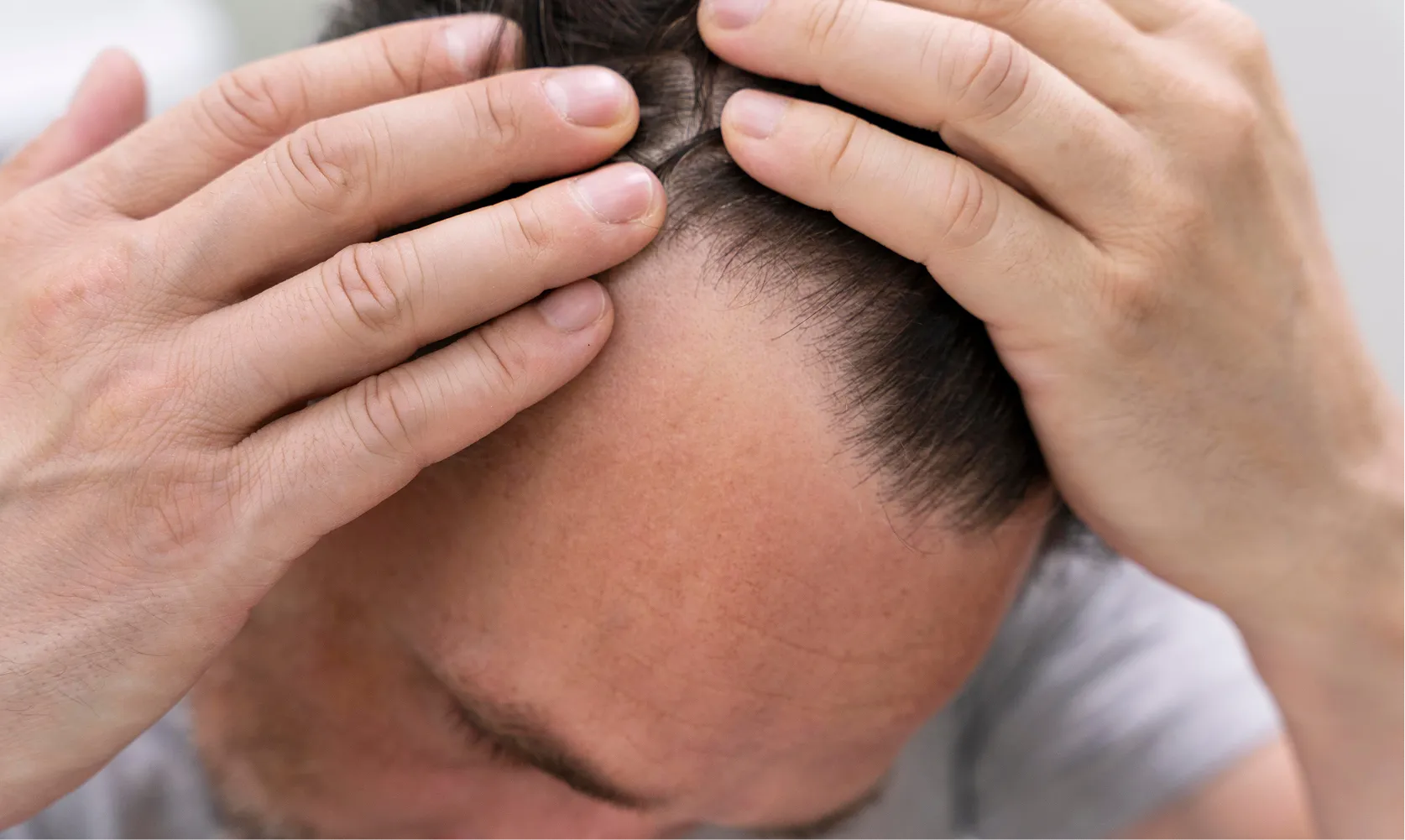
Balding isn’t just about hair loss; it can deeply affect confidence and well-being. Balding refers to progressive hair thinning or noticeable hair loss, often impacting confidence and daily life. Many individuals experience balding in different forms, including male pattern baldness and female pattern baldness. Understanding the stages and symptoms is the first step toward targeting the right balding treatment and protecting healthy hair.
'Balding' refers to excessive hair loss from the scalp, most commonly described in medical terms as 'androgenetic alopecia' or 'pattern hair loss'. It occurs when the rate of shedding exceeds regrowth, causing thinning on the top, bald patches, or widening parts. Over time, persistent balding patterns may develop, making early diagnosis and treatment essential for lasting results.
Balding occurs in several types, each with distinct patterns and underlying causes:
Identifying the type guides accurate diagnosis and treatment for lasting results.
Several factors contribute to balding:
A thorough diagnosis helps identify the exact reason for your itchy scalp. At Dr Marwah’s Clinic, dermatologists begin with:
At Dr Marwah’s Clinic, expert diagnosis includes:
Balding develops in distinct stages, especially for pattern baldness. Recognising the stage helps customise treatment and set appropriate expectations.
|
Stage |
Male Pattern Baldness |
Female Pattern Baldness |
|
1 |
No visible thinning |
Full hair coverage; normal part |
|
2 |
Mild recession at temples |
Subtle thinning, widening part |
|
3 |
Noticeable recession/crown thinning |
Visible thinning on top |
|
4 |
More pronounced loss at crown/temples |
Significant thinning; larger part |
|
5 |
Connected bald zones |
Diffuse thinning over the scalp |
|
6 |
Advanced loss; few hair bridges remain |
Extensive thinning; little density |
|
7 |
Nearly total baldness, horseshoe fringe |
Severe thinning, minimal hair left |
Typical symptoms include:
Seek professional care if you experience:
Treatment depends on type and stage:
Personalised plans at our clinic ensure long-term results and patient comfort.
Persistent balding deserves expert attention. Dermatologists offer comprehensive scalp assessments and advanced treatment plans to restore comfort, confidence, and healthy hair for men and women at every stage of balding.
Book your consultation today and discover personalised solutions to achieve lasting hair restoration.
Balding progresses through seven stages, starting with subtle thinning and receding hairline to extensive baldness with hair remaining only on the sides and back.
Genetics, hormonal changes (DHT sensitivity), and ageing are the main causes of male pattern baldness.
Yes, treatments like topical minoxidil and hormone therapy can help manage female pattern baldness.
Seek help if you notice persistent thinning, sudden bald patches, scalp discomfort, or emotional distress related to hair loss.
Options include medications (minoxidil, finasteride), PRP therapy, laser treatment, hair transplants, and lifestyle changes.